


Maintaining one’s culture, values and traditions is beyond price.
Getano Lui, Jnr
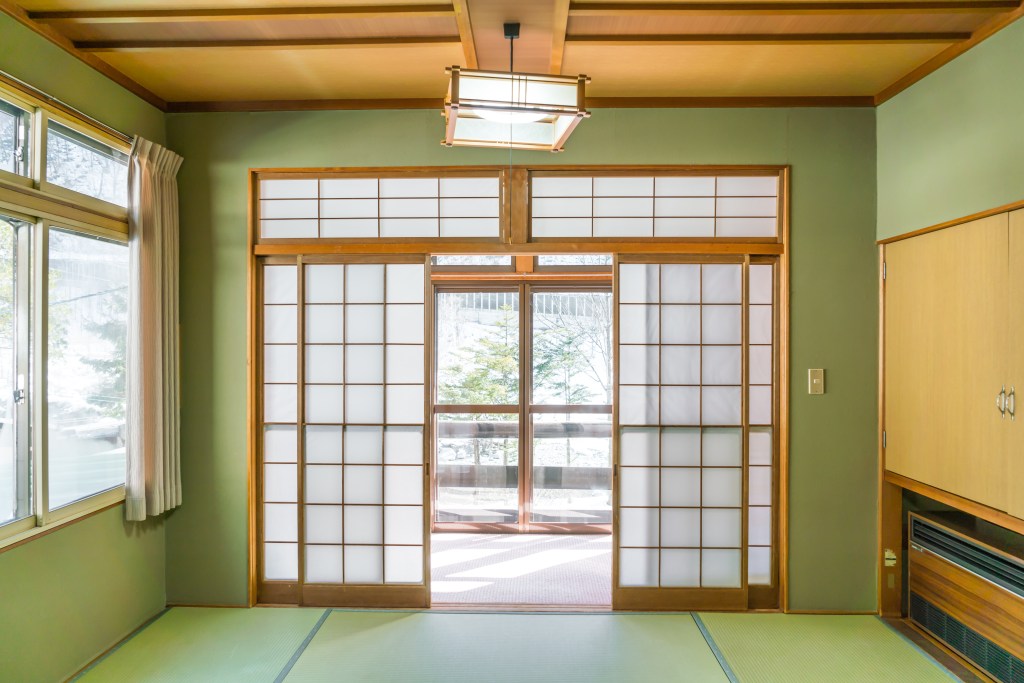
Every country has its own style of interior and architecture. Traditional Japanese style rooms are the heritage of Japan. People from different parts of the world who visit Japan want to stay in a traditional Japanese style room at least once. These traditional rooms are called ‘Washitsu’ or simply Tatami rooms.
History:
Many years back in the Muromachi period (1333-1573) the tatami rooms were only seen in the house of wealthy people. Gradually it became very common in every Japanese household. In the past these tatami rooms were used as study rooms, whereas nowadays these are generally used as living rooms or guest rooms in a Japanese household. Tatami mats are considered one of the most important elements of Japanese interior. According to the Japanese tradition one is supposed to enter a tatami room after taking the shoes or slippers off.
Elements:
I. Tatami mat:
The most important element of a traditional Japanese style room is the Tatami mat. The tatami mats are the flooring material of a Tatami room. Tatami mats are woven mats made up of rice straw. They are thick. Fine thin rushes are woven to make the cover of the mat. They can be both hand-made and machine-made. The hand-made ones are more expensive than the machine-made ones. A freshly made tatami mat has a distinct smell of rice straw. In the past tatami mats were used in every room of Japanese homes except the kitchen and toilet. These days, most Japanese homes have only one tatami room. Tatamis are generally available in standard sizes. They are the measuring of a Japanese room. There are 6/8 tatami mats in a normal Japanese tatami room. The size of a washitsu depends on how many tatami mats are there in the room. For example, it is very common to address a washitsu as a 6 mat room or 8 mat room.
II. Sliding doors (Fusuma & Shoji) :
In a tatami room, sliding doors are typically used between adjoining rooms as a partition. These doors are made up of wooden frames. Doors which are covered with thick, opaque paper are known as Fusuma; and the doors covered with translucent paper are called shoji. The shoji doors allow light to filter in as they are semi-transparent.
III. Low table:
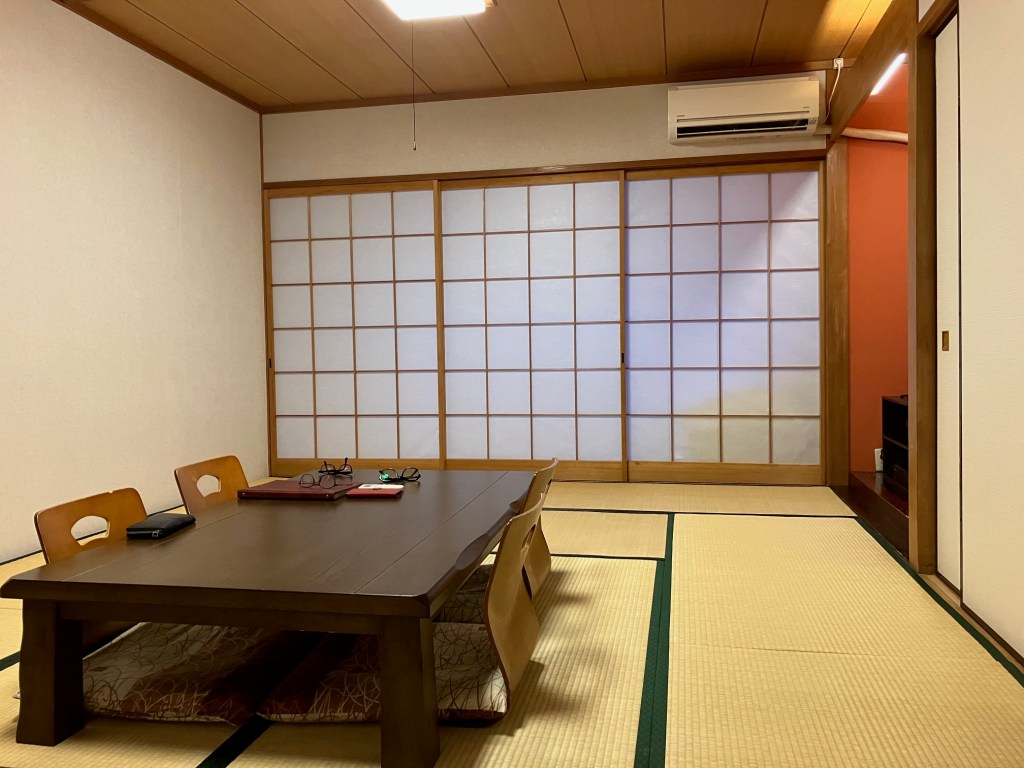
In a traditional Japanese room sitting arrangement on the floor is a very common practice. Low tables are found in these rooms. These tables are made up of wood. People typically sit around the table.
IV. Chair (Zaisu):
A Zaisu is a Japanese low chair found in tatami rooms. It has only a back without legs.
V. Floor cushion (Zabuton):
In a tatami room floor cushions are used for sitting. They are called Zabuton. These are large and rectangular shaped. The cushions are put onto zaisu chairs for a more comfortable sitting. Zabutons are also used for meditation since many years. It should be noted that it is very impolite to step onto zabuton of other person from your own.
VI. Closet (Oshiire):
The built-in closets are known as oshiire. You can store the cushions inside it when not in use. During cleaning the tatami mats are also stacked inside the oshiire.
These are the common elements of a traditional tatami room in Japan. The Japanese are still maintaining this tradition very delicately and proudly.


 QuesterHUB